Natural Dog Food: How We Feed Our Labradors
Fresh or ready-made food with no additives, instead of commercial kibble. We explain what we feed our dogs and puppies and how to switch to a natural diet, with a free consultation.
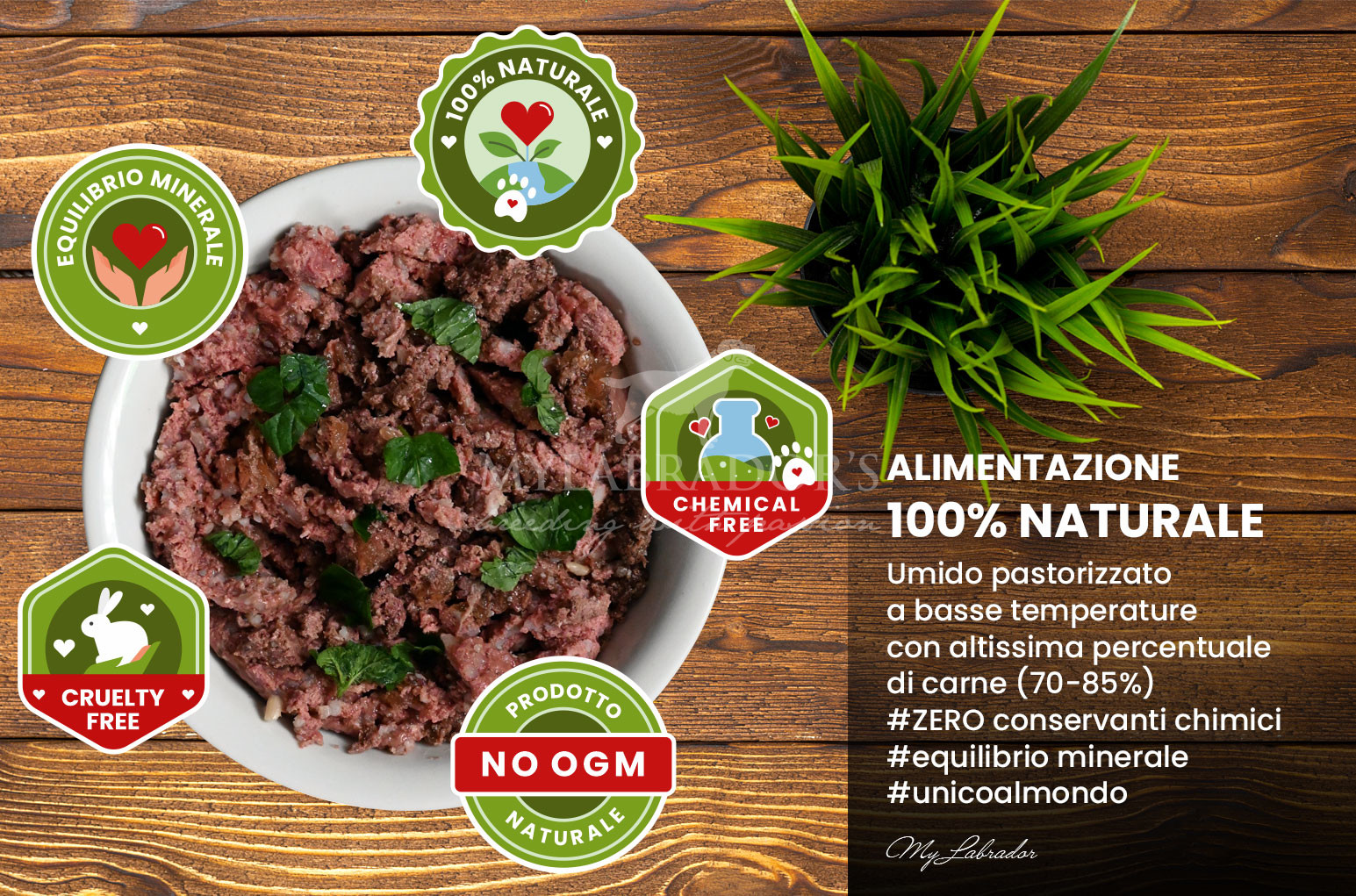
Natural feeding for dogs is based on real meat, organs, raw meaty bones and a small amount of vegetables, either raw or gently cooked at low temperature, with no chemical additives and no grain-based recipes. It’s what we feed our adult Labradors and our puppies from weaning onwards, instead of commercial kibble.
There are two ways to go about it, and we’ll help you choose the right one:
If your dog has kidney, liver or intestinal disease, an allergy, or is on a diet prescribed by a vet, only change its food in agreement with your vet.
The dog is an opportunistic carnivore: its digestive system is designed for meat, even though over the centuries it has got used to eating other things. Commercial kibble is convenient, but in most cases it is made mainly of grains and starches, cooked at high temperatures and extruded, with added fats, flavourings and preservatives.
That’s why we don’t use kibble at our kennel, neither for adult dogs nor for puppies. In our experience, since we switched to natural feeding our dogs have shinier coats, smaller and firmer stools, less odour and slower, steadier growth – which for a Labrador is important to protect the joints.
An example on meat: fresh chicken is mostly water. If the label says “fresh chicken 18%”, once the kibble has been cooked and dried, much less of that meat is actually left.
Not all ready-made foods are the same. These are signs of a low-quality product:
A good ready-made food states exactly which meats it contains and in what percentage, and has no chemical preservatives.

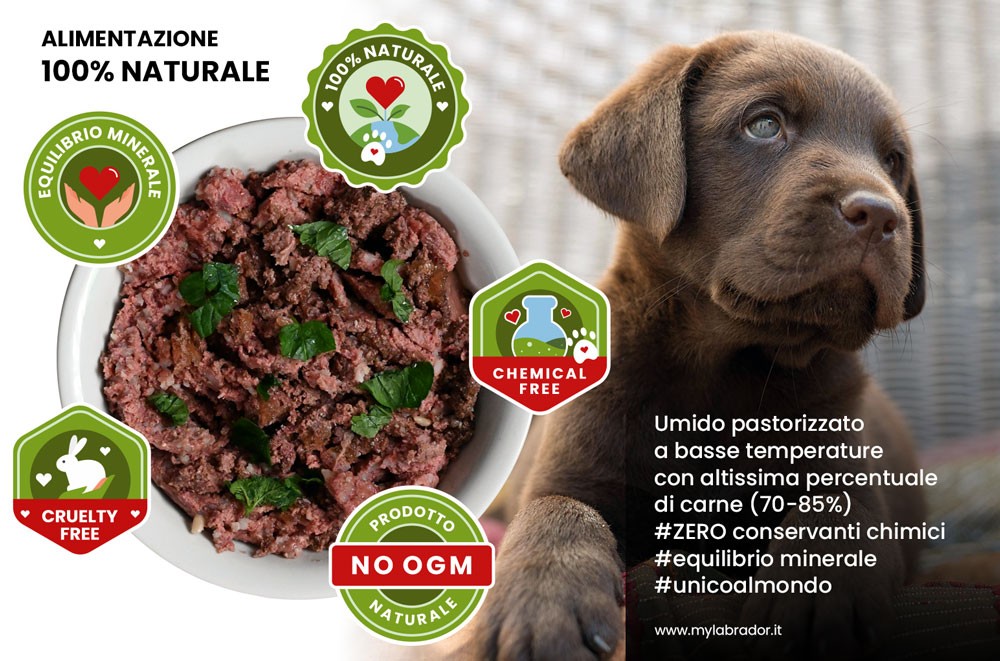
For our own dogs, and for families who don’t have time to prepare meals, we use REiCO Vital-Systeme products:
Transparency: Stefano is a REiCO Vital-Systeme nutrition consultant (REiCO profile). We recommend these products because we use them every day with our dogs and puppies.
If you have the time, you can switch to a home-cooked or raw diet: boneless meat, soft raw meaty bones, organs and a small amount of blended or juiced vegetables, because dogs digest cellulose poorly. Balance is built over the course of weeks, not in every single meal: you don’t need a gourmet menu, just a simple plan you can actually stick to.
Every MyLabrador’s puppy goes home with clear guidance on what and how much to feed, and Stefano supports the dog’s nutrition for life through the litter’s WhatsApp group.
Labradors tend to put on weight: partly because of a genetic predisposition linked to the POMC gene, and partly because they eat too much and don’t move enough. Excess weight puts strain on the joints and on overall health.
How to tell if your dog is overweight: run your hands along its ribcage.
How to prevent it: don’t overfeed from puppyhood, no table scraps or snacks between meals, and daily exercise throughout its life. Energy needs also change after neutering and with age, so the portion needs to be recalculated. If you like, we can work out your Labrador’s energy requirements together.
Diet also plays a key role in gut health and the intestinal microbiome.
What is natural feeding for dogs?
It’s a diet based on real meat, organs, raw meaty bones and a small amount of vegetables, with no chemical additives and no grain-based recipes. It can be home-cooked, raw (BARF) or made with ready-made natural foods, such as wet food pasteurised at low temperature or cold-pressed food.
Is kibble bad for dogs?
Not all kibble is the same, but much of it is made mainly of grains and starches, cooked at high temperatures and with additives. We don’t use it at our kennel: in our experience, natural feeding gives a shinier coat, firmer stools and steadier growth.
BARF or ready-made natural food: which is better?
It depends on how much time you have. A tailored home-cooked or raw diet is the most complete option if you can prepare the meals. If you’re short on time, a good-quality ready-made natural food is a great alternative to kibble.
How can I tell if my Labrador is overweight?
Run your hands along its ribcage. At the ideal weight the ribs are barely visible but easy to feel. If you can’t see them and only feel a layer of fat, the dog is overweight.
Can I change the diet of a dog that is unwell?
If your dog has kidney, liver or intestinal disease, an allergy, or is on a prescription diet, only change its food in agreement with your vet.
What food do you give your Labradors?
We use REiCO Vital-Systeme products: wet food pasteurised at low temperature with 70–85% meat, cold-pressed food with no preservatives and micronised seaweed for mineral balance. Stefano Martini is a REiCO nutrition consultant.
Is the nutrition consultation free?
Yes, the first consultation is free. For families with a MyLabrador’s puppy, we support the dog’s nutrition for life.