ENCI Pedigree: What It Is, How It’s Issued and How to Read It
The pedigree certificate is a purebred dog’s identity card. We explain who issues it, how to check it online and what it says, section by section.
The ENCI pedigree is the official pedigree certificate for purebred dogs in Italy. It is issued only by ENCI (Ente Nazionale della Cinofilia Italiana, the Italian Kennel Club), which keeps the Italian Stud Book: the document proves that the dog belongs to a breed recognised by the FCI and lists its ancestors over four generations.
In Italy, a dog can only be sold as “purebred” if it has a pedigree. This is set out in Legislative Decree 529/1992, which implements EU Directive 91/174/EEC. A dog without a pedigree, even if it looks like a Labrador, is not legally a Labrador.
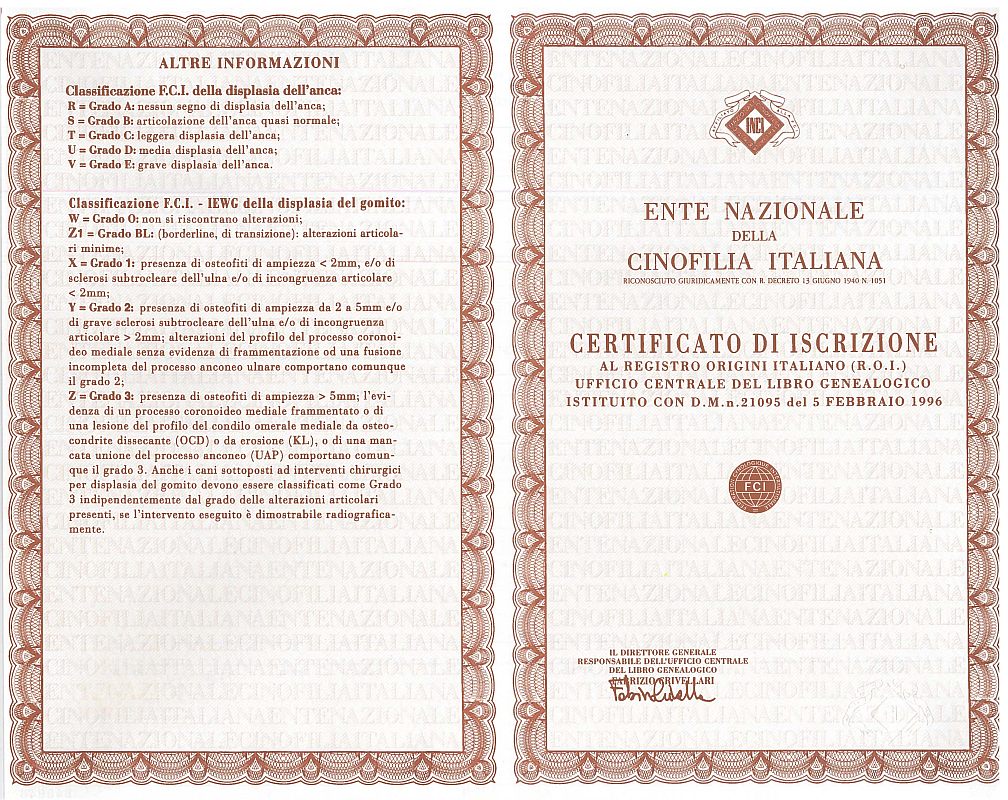
A pedigree proves that the dog was born to purebred parents who are themselves registered in the Stud Book. Before reserving a puppy, make three checks:
Once the puppy has been microchipped, you can find it in the online Stud Book by entering its 15-digit code. The microchip must be implanted within the timeframe set by regional rules, usually within the first two months of life.
Be wary of anyone offering the same puppy “with or without a pedigree” at different prices. ENCI registration costs the breeder just a few tens of euros per puppy: a “purebred dog without a pedigree” is legally a mixed-breed dog.
The breeder registers the puppies in the Stud Book in two steps:
The paperwork goes through the provincial ENCI branch; ENCI in Milan registers the puppies and prints the pedigrees. Late submissions cost more: current fees are published on the ENCI website.
Imported dogs. A dog born in an FCI country arrives with an export pedigree from its country of origin, which can be converted into an ENCI pedigree by applying to ENCI.
Change of ownership. When a puppy goes to a new family, the change of ownership must be recorded with ENCI on the pedigree. This is a separate procedure from transferring the microchip registration to the new owner in the regional dog registry.
The ENCI Stud Book has two registers, which you can also tell apart by the colour of the pedigree. The document shows the register code and the registration number.
| Pedigree | Register | Who is registered |
|---|---|---|
| Brown | ROI (formerly LOI), Registro Origini Italiano (Italian Stud Book) | The standard pedigree. Dogs born to ROI-registered parents, or with at least three generations of RSR-registered ancestors |
| Green | RSR (formerly LIR), Registro Supplementare Riconosciuti (Supplementary Register) | Purebred dogs with a known pedigree line of fewer than four generations, or recognised as purebred after a conformation assessment by an expert judge |
| Pink | Not a separate register | Puppies born to breeding dogs entered in the ENCI Selected Breeding register |
From RSR to ROI. The offspring of an RSR dog and an ROI dog remain in the RSR. The line only returns to the ROI after three generations of RSR-registered ancestors.
ENCI Selected Breeding. This is a recognition for ROI-registered dogs that have received a positive assessment of conformation and temperament from an expert breed specialist judge at an official ENCI event. They must also be tested for the breed’s most important hereditary diseases. The Selected Breeding register can be consulted on the ENCI website.
A pedigree doesn’t tell you whether a dog is beautiful or suitable for breeding. ENCI doesn’t check whether the parents meet the Labrador Retriever breed standard, whether they have dental faults or a good temperament: that’s the breeder’s job, through their selection choices. What a pedigree does show you is where the dog comes from, which ancestors hold titles and how the matings were planned.
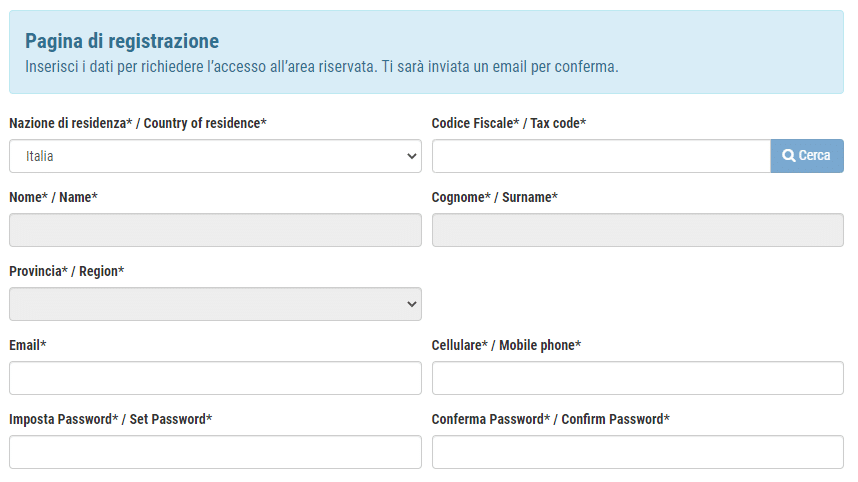
The online Stud Book is on the ENCI website (in Italian).
You’ll see the dog’s name, parents, ancestors, titles and, where available, official dysplasia results.
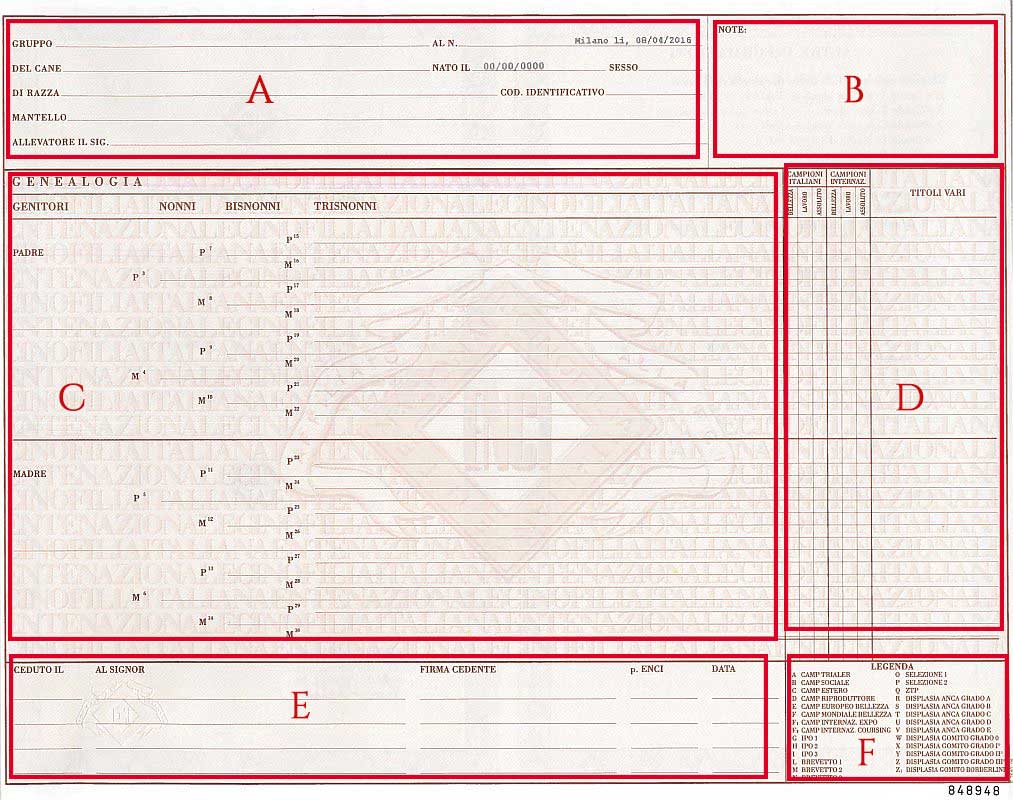
Here’s how to read a Labrador Retriever’s ENCI pedigree, section by section.
| Section | What you’ll find |
|---|---|
| Top left | The dog’s details: FCI group (for the Labrador, Group 8: retrievers, flushing dogs and water dogs), register and registration number (ROI or RSR), registration date, name with the kennel’s affix if any, sex, breed, date of birth, coat colour, 15-digit microchip, breeder’s name and address |
| Top right | Official hip (HD) and elbow (ED) dysplasia results, if the dog has had official X-rays. In Labradors, official scoring is done after 12 months of age by recognised scoring centres such as Ce.Le.Ma.Sche. or FSA |
| Centre | The pedigree line: parents, grandparents, great-grandparents and great-great-grandparents |
| Next to the ancestors’ names | The ancestors’ titles and awards, for example Italian or International Champion |
| Bottom left | Transfer of ownership from the breeder to the new owner, with signatures and ENCI stamp |
| Bottom right | Key to the title abbreviations |
The breed standard allows three colours for the Labrador: black, yellow (from light cream to fox red) and liver/chocolate. Read more about black, yellow, fox red and chocolate Labradors.
Dysplasia results that don’t appear. If an adult Labrador comes from abroad, or if the X-rays were scored by a body outside the FCI (for example the British BVA), the results may not appear on the ENCI pedigree. In that case the breeder should give you the original certificates.
All MyLabrador’s puppies are born to ROI-registered parents and are registered in the ENCI Stud Book. We submit forms A and B on time, with the microchip already implanted.
The pedigree doesn’t arrive with the puppy: ENCI in Milan prints it and sends it to our provincial branch a few months later. As soon as it arrives, we pass it on to the family. For puppies going abroad, we also handle the ENCI export pedigree paperwork.
A pedigree on its own isn’t enough. Owning a Labrador from selected bloodlines, the result of generations of carefully planned matings, is a very different thing from mating two dogs at random. That’s why we also test our breeding dogs with:
A champion title isn’t inherited: good selection is. Meet our breeding dogs and see our planned litters.

What is an ENCI pedigree?
It’s the official pedigree certificate for purebred dogs in Italy. It is issued only by ENCI, which keeps the Stud Book: it proves that the dog belongs to a breed recognised by the FCI and lists its ancestors over four generations.
Can a purebred dog be sold without a pedigree?
Not in Italy. Under Legislative Decree 529/1992, a dog can only be sold as “purebred” if it is registered in the Stud Book. Without a pedigree it can’t be declared as belonging to a breed: legally it’s a mixed-breed dog.
When must a puppy’s pedigree be applied for?
The breeder submits form A, the mating and birth notification, within 25 days of the litter’s birth, and form B, the registration of each puppy, within 90 days. Late submissions cost more.
How much does an ENCI pedigree cost?
It costs the breeder a few tens of euros per puppy, plus the branch’s fees. Current fees, including surcharges for late submissions, are published on the ENCI website.
What’s the difference between an ROI and an RSR pedigree?
The ROI pedigree (formerly LOI) is brown and is the standard one: it covers dogs born to ROI parents or with at least three generations of RSR-registered ancestors. The RSR pedigree (formerly LIR) is green: it covers purebred dogs with a known pedigree line of fewer than four generations, or recognised after a conformation assessment by an expert judge.
What is a pink pedigree?
It isn’t a separate register but a different-coloured pedigree, issued to puppies born to breeding dogs entered in the ENCI Selected Breeding register: ROI dogs judged suitable for conformation and temperament by an expert judge and tested for the breed’s hereditary diseases.
How can I check a dog’s pedigree online?
Register on the ENCI website, log in to the online Stud Book and search for the dog by microchip number or registration number. You’ll see the parents, ancestors, titles and any official dysplasia results.
When does a MyLabrador’s puppy’s pedigree arrive?
A few months after the puppy goes home. ENCI in Milan prints it and sends it to our provincial branch; as soon as it arrives, we pass it on to the family.