
Travelling by Car with Your Labrador: Where to Put Them, the Law and Hot Weather
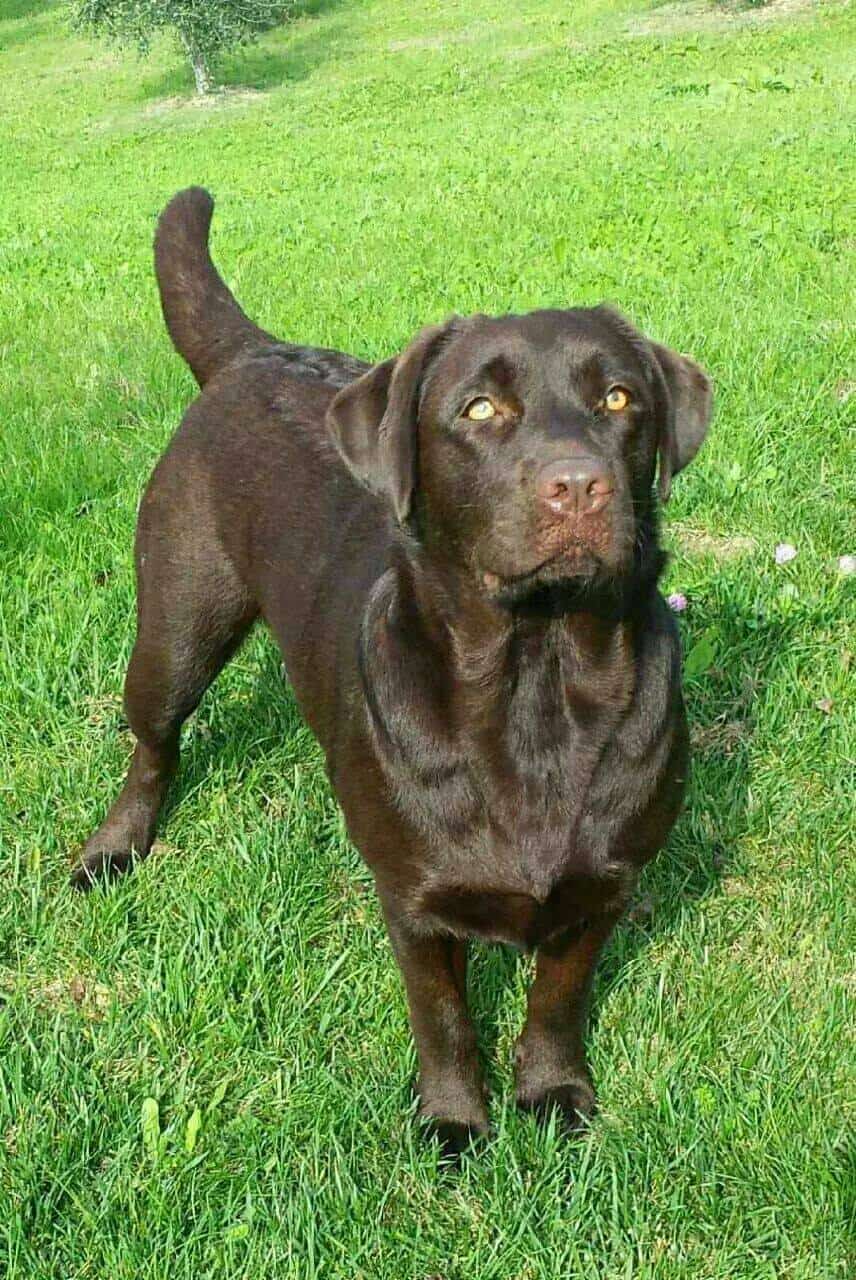
The Labrador makes a great travel companion. It isn’t one of those dogs that spends the whole journey fidgeting and wagging: if it has been well trained, within a few minutes of setting off it settles wherever you’ve taught it to and sleeps until you arrive. By car, ferry or train, it travels happily.
To keep it that way, though, you need a few rules: where to put your dog, what the law says, and how to handle rest stops and hot weather. Let’s go through them. If you’re still about to collect your puppy, see our tips on bringing your puppy home by car.
What the law says about dogs in cars
Rules vary from country to country, but the principle is the same almost everywhere: a dog must not distract the driver or get in the way of driving.
- In Italy, article 169 of the Highway Code allows one dog to travel loose in the car as long as it doesn’t hinder the driver; with more than one dog, they must be in a crate or in a part of the car separated from the driver by a net or grille.
- In the United Kingdom, the Highway Code asks drivers to make sure dogs are suitably restrained, for example with a seat belt harness, a crate or a dog guard, so they can’t distract you or injure you, or themselves, if you stop quickly.
- Everywhere: a dog should never be on the driver’s lap or at their feet.
For a dog the size of a Labrador, even when travelling alone, a fixed set-up is always best: a loose dog on the seat becomes a danger to itself and to the passengers in a sudden stop.
Where to put your Labrador in the car
In the boot, with a dog guard
For an adult Labrador, the most comfortable solution is the boot of an estate car or SUV: a washable blanket or mat, the parcel shelf removed so air can circulate, and a dog guard (a net or grille) separating the boot from the passenger area. Your dog has room to lie down and can’t climb over into the front.
In a crate
If you have more than one dog, or want maximum safety, choose a car crate secured in the boot, big enough for your Labrador to stand up, turn round and lie down. It is also the safest option in an accident.
On the back seat, with a harness
If your car doesn’t have a suitable boot, your dog can travel on the back seat with a car harness clipped to the seat belt (never to the collar) and a seat cover. Never on the front seat, in front of an airbag.
Rest stops and heat: the most important rule
Never leave your Labrador alone in the car in warm weather, not even for a few minutes, not even in the shade and not even with the window open.
In summer, a parked car heats up very quickly and the inside can go above 50 °C (122 °F). Dogs can only cool down by panting, and heatstroke can become fatal within minutes. A window left open or parking in the shade isn’t enough: the shade moves and the air doesn’t circulate enough.
During the journey:
- stop roughly every two hours to give your dog water and a chance to stretch its legs, always on a lead at service stations;
- always carry a bottle of fresh water and a bowl;
- keep the air conditioning reaching the boot area too, or use sunshades on the rear windows;
- on the hottest days travel early in the morning or in the evening;
- if you stop to eat, take turns: someone stays with the dog, or take it with you where dogs are allowed.
How to get your Labrador used to the car
A Labrador that travels calmly as an adult is almost always a puppy that had good experiences in the car. A few tips:
- Start with short trips to nice places, like the park or the woods, not just to the vet.
- Always put it in the same spot, with its own blanket: it becomes its “travel bed”.
- Reward it when it gets in and when it stays calm.
- Avoid feeding it in the two to three hours before a long journey, to prevent car sickness.
- Drive smoothly, especially on bends.
By train and ferry
Labradors also travel happily by train and ferry, but the rules vary between companies. Large dogs usually need a lead and a muzzle, and sometimes a ticket; on ferries you may have to use the on-board kennels, or pet-friendly cabins may be available. Always check the conditions before booking, and take your dog’s health record or pet passport if you’re going abroad.
Coming to collect a puppy from abroad? See our tips on where to stay near the kennel, or ask us about our puppy delivery option.
Frequently asked questions about Labradors in the car
Where should a Labrador travel in the car?
The best option is the boot of an estate car or SUV, with a blanket and a dog guard, or a car crate secured in place. Otherwise, the back seat with a harness clipped to the seat belt. Never the front seat.
Is it a legal requirement to restrain a dog in the car?
Rules vary by country, but almost everywhere a dog must not distract the driver. In Italy one dog may travel loose if it doesn’t hinder the driver, while two or more need a crate or a separated area; in the UK the Highway Code asks for dogs to be suitably restrained.
Can I leave my dog in the car with the window open?
No. In warm weather never leave your dog alone in the car, even with the window open or in the shade. The car heats up quickly and heatstroke can be fatal within minutes.
How often should I stop when travelling with a dog?
Roughly every two hours, to give your dog water and a chance to stretch and relieve itself, always on a lead at service stations.
Do Labradors get car sick?
Puppies sometimes do, but in most cases it passes as they get used to the car. Travelling on an empty stomach, driving smoothly and keeping the car cool and well ventilated all help. If the problem persists, talk to your vet.
Can a Labrador travel by train or ferry?
Yes, usually on a lead and with a muzzle and, depending on the company, with a ticket or in the on-board kennels. Always check the rules before you travel.
Looking for a four-legged travel companion?
Our Labradors grow up in a family setting and quickly get used to new experiences, car journeys included. On collection day we’ll explain how to handle the first trip, and we’re here for you afterwards too. Discover our puppies or contact us with any questions.