
Labradors and Children: Why They’re the Ultimate Family Dog
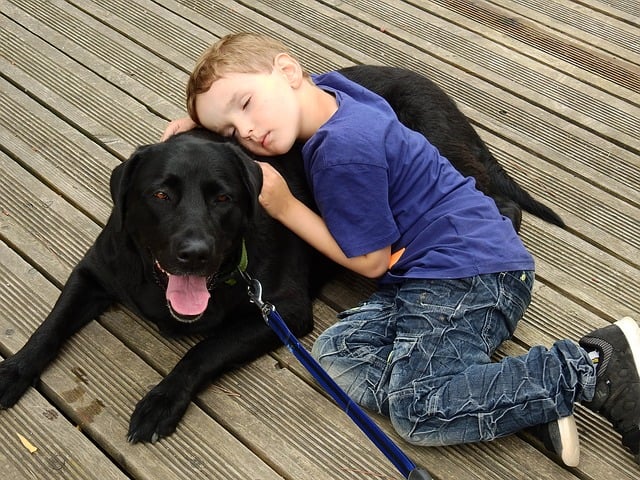
A Labrador’s sociable nature means it loves playing with the “two-legged puppies” of the house, with a patience that amazes anyone seeing it for the first time. It’s no coincidence that in the United Kingdom and the United States the Labrador and the Golden Retriever are seen as the ultimate family dogs: two affectionate, well-balanced breeds that are usually very tolerant with children.
But “good with children” doesn’t mean “a toy for children”. In this article we look at why Labradors get on so well with little ones, which rules keep the relationship safe and happy for everyone, and how to choose the right puppy for a family with kids.
Why the Labrador is the ultimate family dog
The Labrador was bred as a retriever: selected to work alongside people, stay calm amid commotion and bring back game with a “soft mouth”, without damaging it. These are exactly the qualities that make it such a good companion for children:
- A balanced, sociable temperament, with little tendency to aggression;
- high tolerance of the noise, sudden movements and chaos of a house with children;
- a love of play that lasts for years, well into adulthood;
- quick to learn, so older children can take part in its training;
- a soft mouth, inherited from its retrieving work.
Temperament doesn’t depend on the breed alone, though. The parents’ genetics, the breeder’s work in the first weeks and socialisation all play their part. Our puppies, for example, follow the Bio Sensor programme of early stimulation in their first days of life.
Puppies and young children: why an adult must always be there
Play between a Labrador puppy and children under five should always be supervised by a parent. Neither the child nor the puppy understands its own strength: a child may squeeze, pull ears or fall on the puppy, and a puppy may jump up, scratch or nip in play, with very sharp milk teeth.
A puppy isn’t a cuddly toy, even if it looks like one in the toilet roll adverts. It’s a living being that gets tired, gets scared and needs rest.
Even the gentlest Labrador may react if it’s disturbed while sleeping, eating or in pain. Supervision isn’t needed because Labradors are “dangerous”, but because no dog and no small child can yet handle every situation on their own.
Golden rules for children and Labradors
What to teach children
- Don’t disturb the dog when it is sleeping, eating or has gone to its bed: that’s its safe place.
- Don’t pick the puppy up on your own: a fall can hurt it, and jumping down from a height isn’t good for growing joints.
- No tight hugs, kisses on the face or wrestling games with the dog.
- Don’t pull its tail, ears or coat, and don’t climb on its back.
- Stroke it calmly on its sides and chest, calling it over instead of chasing it.
What parents do
- Always supervise play with young children and stop it before the puppy gets over-excited.
- Set up a quiet area (a bed or a pen) where nobody disturbs it.
- Learn to recognise the dog’s signs of stress: yawning, lip licking, turning its head away, moving off.
- Teach the puppy not to nip hands, offering chew toys instead of fingers.
- Involve it with the children in positive activities: fetching a ball, simple training exercises, walks together.
The best games for Labradors and children
- Fetch with a ball or a soft toy: it’s a Labrador’s favourite game by nature.
- Treasure hunt: the children hide a treat and the dog finds it with its nose.
- Simple exercises, such as “sit” and “stay” rewarded with a treat, guided by an adult.
- Family walks, with an adult holding the lead until the dog is well trained.
Avoid, on the other hand, overly boisterous tug-of-war with little ones, chasing games where the dog runs after the child, and wrestling: they over-excite the puppy and teach it to use its mouth.
How to choose the right puppy for a family with children
For a family with young children, what matters most is the parents’ temperament and the breeder’s work. A few tips:
- Meet the mother and, if possible, the father: their temperament is the best clue to the puppies’. You can meet ours on the Our Labradors page.
- Choose a breeder whose puppies grow up in the home, used to noise, people and children.
- Ask the breeder to help you pick the most balanced puppy, neither the boldest nor the shyest.
- Consider the line: a working-line Labrador has much more energy than a show-line one, and needs more activity every day.
- Remember that males and females have slightly different characters.
Our puppies go home after 90 days, when they are more settled and already used to family life. You can also come and meet us, children included, at one of our Open Days.
Frequently asked questions about Labradors and children
Are Labradors good with children?
Yes, the Labrador is one of the best breeds for families with children, thanks to its balanced temperament, patience and love of play. As with any dog, though, play with young children should always be supervised by an adult.
At what age can a child play with a Labrador unsupervised?
Under five, play should always be supervised. Even after that, it’s up to a parent to decide based on the child’s maturity and the dog’s character: in any case, no child should be left alone with a dog for long periods.
Is a male or female Labrador better with children?
Both are great. Females are often a little calmer and smaller, while males are bigger and more boisterous when young. The character of the individual puppy and its parents matters more.
Do Labrador puppies bite children?
All puppies nip in play, especially while teething. It isn’t aggression: manage it by offering chew toys, stopping play when the puppy gets over-excited and teaching children not to wave their hands and feet in front of it.
Labrador or Golden Retriever for a family with children?
The two breeds are very similar in character and both are ideal for families. The Labrador has a short coat that is easier to care for and is often a little livelier; the Golden has a long coat that needs more brushing.
How do I prepare my children for a new puppy?
Explain the basic rules beforehand: don’t disturb it when it’s sleeping or eating, don’t pick it up on your own, stroke it calmly. Involve them in preparing its bed and choosing its name, so they feel part of the project.
Looking for a Labrador for your family?
Our puppies grow up in a family setting, around people and children, from parents selected for temperament as well as health and genetically tested. Before booking, come and meet us at the kennel in Modigliana (FC), Italy, with your children too: it’s the best way to meet the parents and find out which puppy is right for you.
Discover our puppies or contact us to arrange a visit.