Labradoodle: what it really is and why it is not a recognised breed
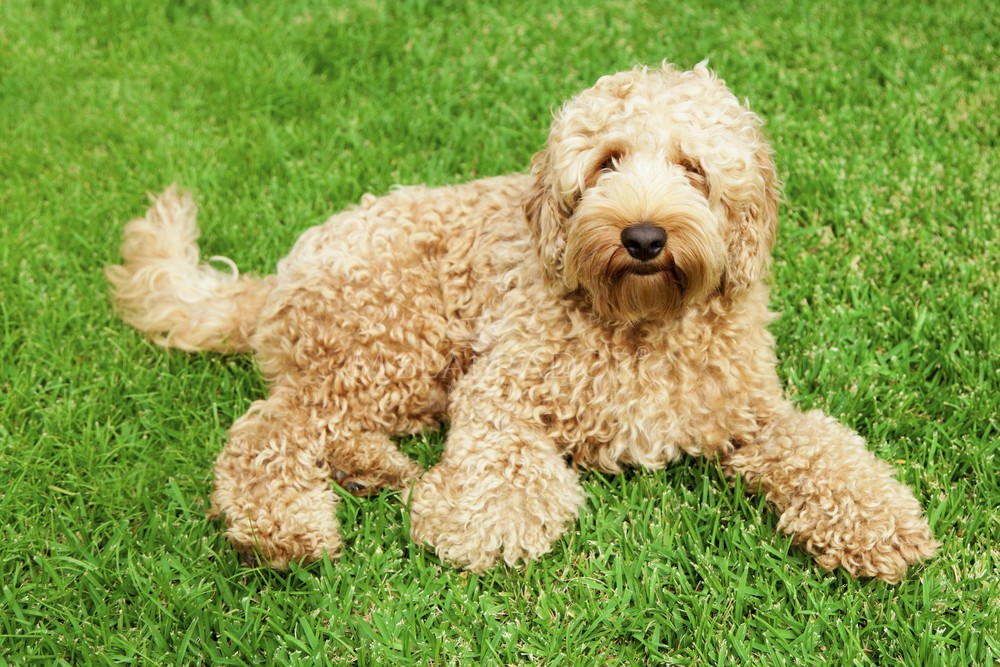
In recent years, the Labradoodle has become one of the most sought-after and heavily marketed dogs, often presented as the ideal family companion: beautiful, intelligent, affectionate, and even “hypoallergenic.”
But behind this glossy image lies a reality that many people ignore or underestimate.
The Labradoodle is not a breed.
It is a cross between a Labrador Retriever and a Poodle, making it technically a mixed-breed dog.
This distinction is not a fine point for dog show enthusiasts: it is a fundamental aspect for anyone who wants to choose a dog consciously, responsibly, and in line with their own expectations.
If someone wants a purebred dog, they should look for an animal that genuinely belongs to a recognised breed — the result of serious selective breeding, breed standards, pedigrees, health testing, and predictability.
If they choose a crossbreed instead, they should know clearly that this is exactly what it is, without confusing fashion with selective breeding.
What the Labradoodle Really Is
The Labradoodle is born from the cross between two very different but equally beloved breeds: the Labrador Retriever and the Poodle.
The commercial idea that made this dog famous is simple: combine the sociable temperament of the Labrador with the curly coat of the Poodle, which is often mistakenly associated with the idea of a hypoallergenic dog.
On paper, it all sounds perfect.
In reality, however, genetics does not work like a made-to-order catalogue. A crossbreed does not guarantee the “best” of both breeds.
It can instead produce an extremely variable combination of appearance, temperament, structure, coat type, and genetic predispositions.
A Labradoodle puppy may be born with a coat similar to a Poodle’s, or with fur closer to that of a Labrador.
It may have a balanced temperament, or it may be more sensitive, more nervous, or less predictable.
And this is precisely where the fundamental difference between a selectively bred purebred and a crossbreed becomes clear.
Why the Labradoodle Is Not a Breed
To truly be defined as a dog breed, a population must meet clear, well-established criteria over time.
There must be a morphological and temperamental standard, consistent selection across generations, and official recognition by cynological bodies such as the Kennel Club and the FCI.
The Labradoodle, to this day, is not recognised as a breed.
There is no universally accepted standard that guarantees real uniformity and predictability comparable to that of a correctly bred purebred dog.
This means that buying a Labradoodle is not the same as choosing an emerging new breed — it means choosing a cross between two different breeds, with all the variability that entails.
The Labradoodle Trend and the Power of Marketing
The success of the Labradoodle does not stem from traditional dog breeding culture, but primarily from marketing.
The name sounds appealing, the look is attractive, and online communication presents it as a “special,” modern dog suited to everyone. In practice, it has become a true trend.
The problem is that a dog cannot be chosen the way one chooses a passing fashion. A dog lives with us for many years, becomes part of the family, and requires time, responsibility, knowledge, veterinary expenses, and management skills.
Choosing a dog simply because it is fashionable is a dangerous shortcut. Responsible dog ownership should instead begin with different questions: what temperament am I looking for?
What size? What activity level? What kind of breeding is behind this dog?
How predictable will it be as an adult?
The Myth of the Hypoallergenic Dog
One of the most commonly used arguments to promote the Labradoodle is hypoallergenicity. Many people believe that, because it is crossed with a Poodle, it sheds little or does not trigger allergies.
In reality, the issue is far more complex.
No dog is completely hypoallergenic.
Allergies do not depend solely on the amount of shed hair, but above all on proteins found in saliva, skin dander, and secretions.
Furthermore, in a crossbreed like the Labradoodle, coat type can vary enormously from dog to dog.
Some individuals will have a curlier coat, others a wavier one, and others still a coat more similar to that of a Labrador.
Selling the Labradoodle as a universal solution for allergy sufferers is, in most cases, a misleading oversimplification.
Purebred or Crossbreed: The Real Difference
Someone who chooses a purebred Labrador Retriever from a reputable breeder is not merely choosing an aesthetic look.
They are choosing a dog built through years of selective breeding based on precise criteria:
- genetic health;
- temperamental balance;
- correct conformation;
- breed-typical aptitudes;
- predictability in growth and development.
Serious selective breeding is not an aesthetic whim: it is a deep and demanding process aimed at preserving the identity, health, and functionality of the breed.
When a crossbreed such as the Labradoodle is purchased instead, this predictability disappears.
There is no way to know with certainty what the dog will be like as an adult, what coat texture it will have, what temperament will fully emerge, or whether the mix of two different genetic heritages will truly deliver the result imagined by the buyer.
If You Want a Purebred Dog, Choose a Real Breed
This is the central point. If a family wants a dog with certain characteristics, they should have the courage to make a clear and informed choice.
If they want a Labrador, they should choose a selectively bred Labrador Retriever.
If they want a Poodle, they should go to a purebred Poodle breeder.
What should not be done is buying a crossbreed convinced that they are taking home a sort of “improved” or “more modern” version of a breed.
This is incorrect both technically and ethically.
A purebred dog exists because there is a precise breeding history behind it.
A crossbreed, by contrast, remains a crossbreed — even when dressed up in commercial appeal, catchy names, and glossy brochure descriptions.
Biology, unfortunately for marketing, is not easily impressed.
The Value of Responsible Breeding
Talking about responsible breeding means talking about health, balance, and respect for the dog.
A serious breeder studies bloodlines, carries out health checks on breeding dogs, evaluates temperament, observes puppy development, and works towards clear, defined objectives.
This approach allows families to know with greater confidence what to expect from their dog — both physically and in terms of character.
There is no such thing as absolute perfection, of course, but there is an enormous difference between a dog selected with criteria and purpose, and a crossbreed offered simply because the market demands it.
The real question is not whether the Labradoodle is likeable or pleasant. Many mixed-breed dogs are wonderful life companions.
The real question is a different one: is it correct to present it as if it were a breed, or as if it offered the guarantees typical of purebred selection? The honest answer is no.
Conclusion
The Labradoodle is a trend that has enjoyed enormous success, but it remains what it is: a cross between a Labrador and a Poodle, and therefore a mixed-breed dog, not a recognised breed.
This does not mean condemning the individual dog.
It does mean, however, making things clear — because those who want a purebred dog have the right to know that a true breed is born from selective breeding, not from a casual or commercially driven cross between two different breeds.
Those who want a purebred dog should choose a purebred dog, raised with seriousness, expertise, and responsibility. Those who choose a crossbreed should do so with full awareness, free of illusions and misleading labels.
Because a dog is not a fashion accessory: it is a living, complex, and important presence that deserves choices made with the head before the heart.
Frequently Asked Questions About the Labradoodle
Is the Labradoodle a recognised breed?
No, the Labradoodle is not officially recognised as a breed by bodies such as the Kennel Club or the FCI. It is a cross between a Labrador Retriever and a Poodle.
Is the Labradoodle a mixed-breed dog?
Yes, technically it is a mixed breed or crossbreed, because it results from the union of two different breeds and not from the stable, consistent selection of a purebred line.
Is the Labradoodle truly hypoallergenic?
No, no dog is completely hypoallergenic. Moreover, the Labradoodle’s coat can vary considerably from one individual to another.
Why choose a selectively bred purebred dog?
Because a selectively bred purebred dog offers greater predictability in terms of health, temperament, conformation, and aptitudes, thanks to the work of responsible breeders.
Is the Labradoodle or the Labrador Retriever a better choice?
It depends on what you are looking for, but if you want a dog with defined characteristics, a breed standard, and documented breeding, the purebred Labrador Retriever represents a clearer and more informed choice.
If you are looking for a purebred Labrador Retriever, carefully selected for health, temperament, and balance, contact us and discover our approach to responsible breeding. Making the right choice from the start means building a calmer, more stable, and more fulfilling relationship for the entire life of your dog.