The difference between extruded kibble and cold-pressed food
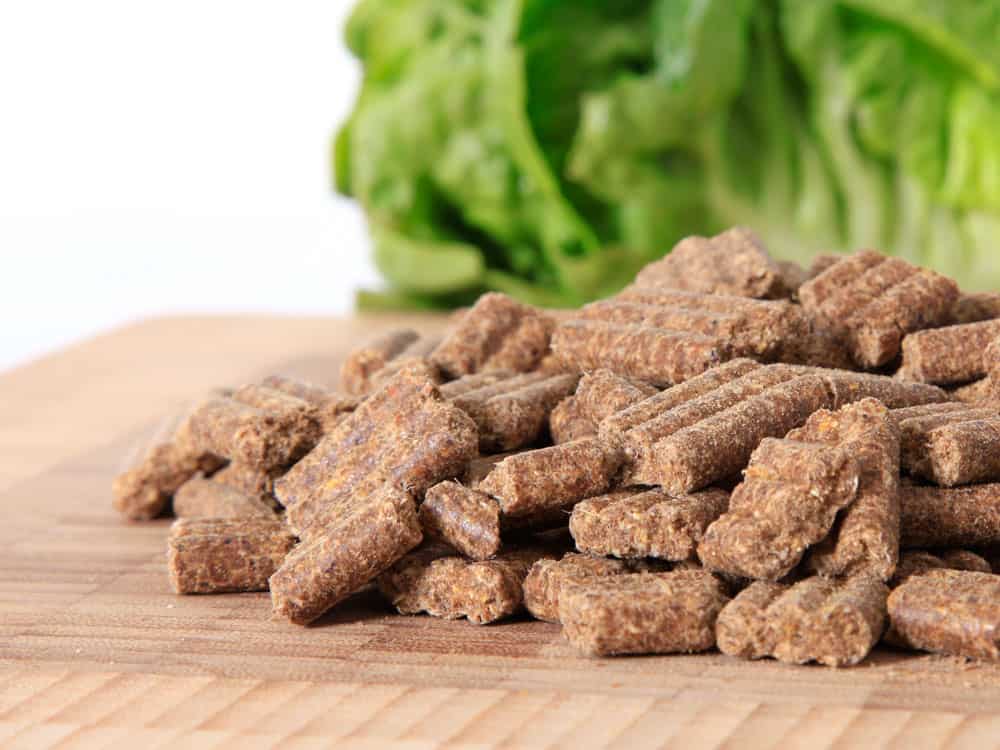
What is the best kibble for dogs? I hope this article sheds light on this delicate subject concerning the feeding of a carnivore.
There is no such thing as a better kibble. All extruded products start from raw materials of dubious origin and quality, and undergo a high-temperature cooking process that eliminates their nutritional value.
For an opportunistic carnivore — which Canis familiaris is and always has been — a cooked food processed with the addition of synthetic additives (vitamins, oils, fats) cannot be of quality.
Extrudates: extruded kibble
The mixture of ground ingredients is pushed into a metal extruder where it is mixed and heated under pressure to around 140°C.
It is easy to understand how this high-temperature cooking destroys all the nutritional value contained in the base ingredients — especially vitamins that are heat-sensitive (such as Vitamin A).
Almost all dog and cat kibble on the market is extruded, unlike cold-pressed kibble, which is often little known and kept somewhat out of sight by mainstream information.
The cold-pressing process is very different: the heat reached during the compression phase is a maximum of 32°C, meaning that vitamins, proteins and mineral salts remain intact, without the need to add synthetic additives afterwards.
What are extrudates?
Extrudates are the typical dry food pellets produced by various industrial pet food brands. The ingredients used are often slaughterhouse by-products unfit for human consumption, which are converted into animal meals through high-temperature incineration (130–180°C), grinding and sterilisation. These animal meals are then used to produce extrudates.
With the help of various additives and the addition of moisture, everything is pressed through a die (a perforated metal plate) at high pressure (up to 60 bar) and high temperature, producing the extrudate.
During this process, all nutrients — proteins, enzymes and vitamins — are destroyed. This is why you will find many synthetic additives listed on the labels.
Once finished, the kibble is then sprayed with oils and animal fats to enhance palatability and entice the noses of cats and dogs to eat this agglomerate.
Extrudates swell enormously in the stomach and are a primary cause of the much-feared gastric torsion in some more predisposed breeds.
Is there an alternative to extruded kibble?
The only alternative to extrudates, if we do not wish to use a fresh raw meat-based diet (ideal for a carnivore), is cold-pressed kibble (pelleted), which is produced in a far more gentle way at lower temperatures, preserving the natural nutritional values of the ingredients — provided, of course, that high-quality ingredients are used.
Cold-pressed kibble does not swell in the stomach because it is not dehydrated and does not immediately absorb water, unlike extruded kibble.
“Grain Free” kibble does NOT exist!
Unfortunately, it is simply an advertising invention by the pet food industry to market grain-free kibble — when in reality they are often full of grains, sometimes up to 60%, cleverly hidden under labels that are difficult for consumers to decipher.
Most people think that grains only include soy, corn and maize, but if you read the labels carefully you will find potatoes, peas and beet — all significant sources of starches that cause irritation of the intestinal mucosa.
These are the raw materials used to produce kibble:
- GRAINS (corn, flours, maize)
- SYNTHETIC ADDITIVES (vitamins, oils, fats, flavourings)
- BY-PRODUCTS AND DERIVATIVES (meat meals or fish meals)
- POTATOES AND PEAS (starches)
- BEET (used to compact stools)
Is it possible to find grain-free kibble?
No — impossible! Dog kibble technically cannot be produced without grains or potatoes/peas, as these act as binders to hold the pellet together.
Since we do not consider potatoes or peas suitable as continuous nutrition for a dog due to their starch content — often used in grain-free kibble — we sought a different solution using a pseudo-cereal: brown millet. Millet is not a true cereal and is easily digestible by dogs.
On the packaging of cold-pressed food you will not find the word ADDITIVES.
Try checking whether you can find the word “additives” on the packaging you currently use: behind a long list of chemical additives, the first one listed will almost always be Vitamin A — which is naturally lacking because it has been destroyed during processing.
These synthetic additives must be added because the high temperatures used during production have eliminated most of the natural nutritional values from the ingredients themselves.
Extruded kibble swells in the stomach. You can test this yourself at home by placing a few pieces of kibble in a glass of water and observing what happens.
Cold-pressed kibble does not swell but dissolves quickly and is digested at the same rate as fresh food.
What is the best food we can give our dog or cat?
Let this be clear to everyone: no industrial product is equivalent to fresh food. Raw meat has the highest degree of bioavailability.
The dog is an opportunistic carnivore while the cat is a strict carnivore (it cannot survive without taurine), so it does not take much to understand that the best diet for a dog or cat is raw meat (offal, green tripe), fruit and vegetables (cooked), and a small source of calcium, which can also be obtained from soft meaty bones or bone broth.
A dog fed on industrial pet food has a stomach pH of around 4, whereas on a fresh (BARF) diet it settles at around 1.5 — allowing it to be healthier and digest almost anything, much like the wolf from which it originates.
Which is the best kibble brand?
None! It is not really a matter of brands or ingredients, let alone price, but of the extrusion process itself, which renders kibble indigestible.
Not all manufacturers use meals, by-products, flavourings and additives: there are extruded products that boast excellent and expensive ingredients (clearly specified, with honest percentages, etc.) — but even these, once subjected to 170–180°C during extrusion, retain very little of their original nutrients, hence the need to add synthetic additives to compensate for what the heat has destroyed.
What is certain is that there are far more poor-quality products on the market than healthy ones — and, as it happens, these tend to be the most well-known brands.
The additive blends they frequently include do not account for individual needs, add excessive quantities of grains that the dog’s body never fully utilises and which accumulate over time, eventually causing a range of problems from intolerances and intestinal inflammation (IBD — Inflammatory Bowel Disease) to more serious conditions.
Synthetic additives can therefore, over the long term, be more harmful than beneficial. In nature, substances — including vitamins and minerals — are never found in isolation, but are always accompanied by other substances that facilitate their absorption and enhance their effect, contributing further important nutritional elements.
Moreover, precisely because they are absorbed differently, there is no risk of overburdening the liver, intestine and kidneys — unlike the overdosing that can occur with synthetic substances.